
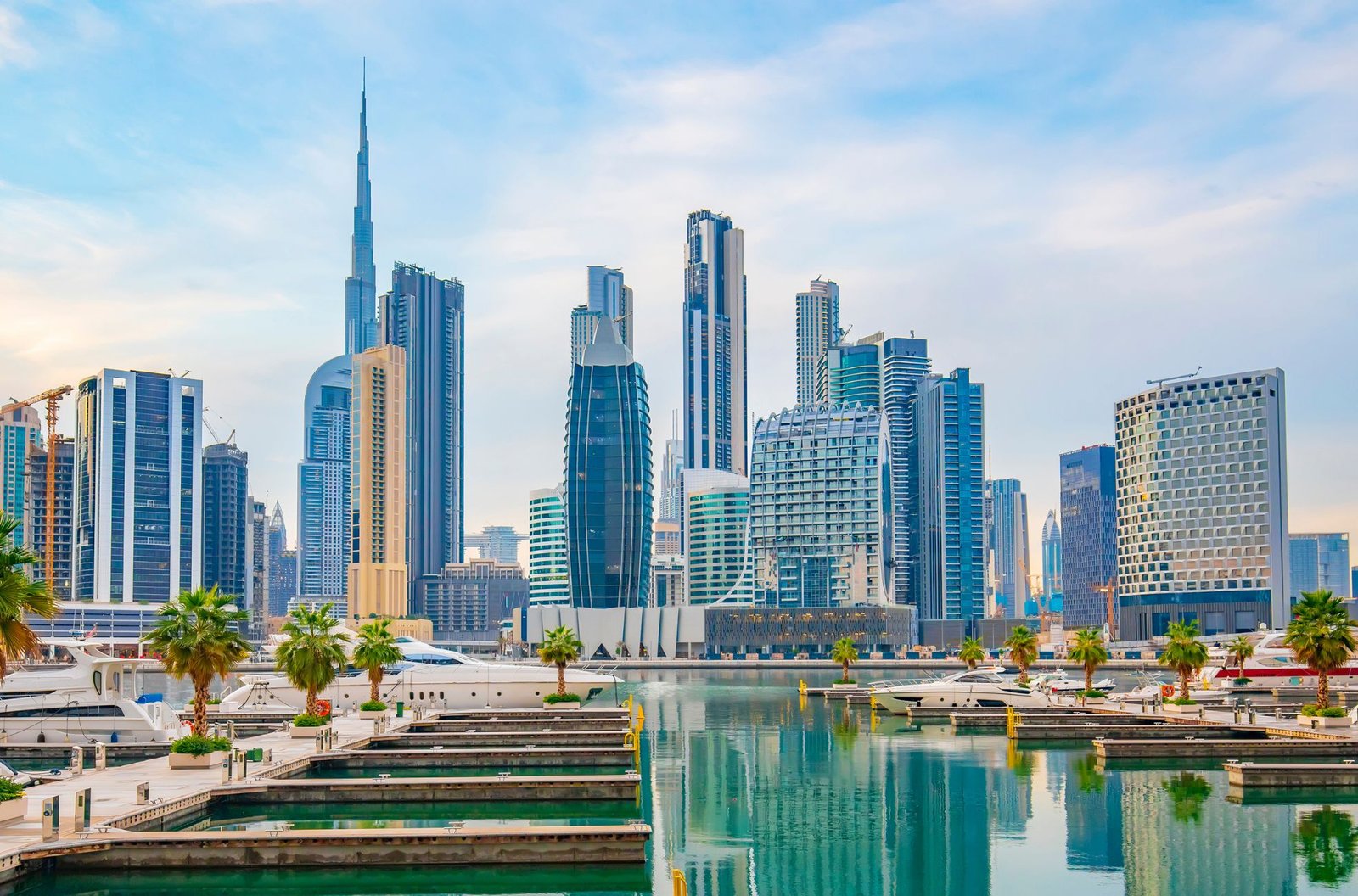
Business Bay or Downtown Dubai: Which One Should You Choose for Investing?
The two neighborhoods are next to each other, separated by a few hundred meters, and offer contrasting investment opportunities. The choice isn’t based on prestige but on what you’re looking for: a steady stream of income or a safe haven.
Two markets that are worlds apart
Downtown is the iconic central district, centered around the world’s tallest skyscraper and the city’s largest shopping mall. Most of the development has already been completed, there is virtually no land available, and the area’s positioning is unambiguously upscale.
Business Bay is the adjacent mixed-use neighborhood, developed along the canal, where office and residential spaces are intermingled. Construction is still actively underway, with a significant number of projects scheduled for completion over the next few years. The properties range from mid-range to high-end, depending on the tower.
What Each Person Brings
Downtown — the safe haven. Prices per square meter are among the highest in the city, with lower gross yields, generally between 5 and 6.5%. On the other hand: a structural scarcity of such properties, immediate international recognition, stable high-end rental demand, and seasonal rental performance among the best in Dubai. It is primarily a capital preservation asset rather than an income-generating one.
Business Bay — returns and risk of supply. Significantly lower entry prices , with gross returns often one to two percentage points higher. The neighborhood benefits from Downtown’s central location without paying the premium. However, there is a significant pipeline of new developments, which puts downward pressure on rents and resale prices as new units come onto the market.
The Real Decision-Making Criterion
If your goal is to generate income and you’re willing to deal with intense rental competition, Business Bay is a good choice—provided you choose a completed tower with manageable maintenance fees and check the number of comparable units under construction in the immediate vicinity.
If your goal is to invest capital in a liquid, defensive asset—one that offers a lower return but performs better in the event of a market downturn—Downtown is the logical choice.
The scarcity of land there acts as a protective factor that Business Bay lacks.
Common mistakes regarding these two neighborhoods
In Downtown, you’re paying the price of an unobstructed view for a partial view of the main tower. The difference in value between the two is considerable and cannot be recouped when reselling.
In Business Bay, buying off-plan without taking into account the number of units that will be delivered that same year within a radius of five hundred meters. This is the main source of disappointment in this neighborhood—far more so than the quality of the buildings.
In both cases, people tend to underestimate the condominium fees. In these market segments, buildings with extensive amenities—such as multiple swimming pools, fitness centers, and concierge services—have fees per square meter that can amount to more than one month’s rent per year.
One possible combination
With a budget that allows for two purchases, it makes sense to split them between the two neighborhoods: Downtown for stability and liquidity, and Business Bay for returns. This represents genuine diversification despite their geographic proximity, because the two markets do not react the same way to a cycle.


